Read the most popular blog posts

Making your own bassoon reeds can be daunting. But, with this simple 5 step process, you'll be able to craft your own reeds in no time. This blog post describes a 5-step process for making bassoon reeds, including using high-quality GSP cane and Sakakeeny-style forming pins. The post also discusses the benefits and challenges of making your own reeds and provides a list of essential supplies needed.
I’ve rounded up 36 of my favorite bassoon gifts on Amazon including supplies, apparel, music, albums, reed tools, and stocking stuffers to help you find the perfect gift for your bassoonist.
Reading tenor clef on the bassoon doesn’t have to be difficult forever! I promise that with some smart strategies you will be reading tenor clef just as well as you can read bass clef. First, we’ll cover what tenor clef is and why we use it, then I have a few easy practice strategies for you to try on your own.
Etude and method books are incredible tools for learning to play the bassoon. Here is a teacher-approved list of essential bassoon method and etude books for beginner, intermediate, and advanced bassoonists.
It can be hard to find information on how to start teaching private music lessons. I made quite a few mistakes as a new music teacher. These are the essential lessons I learned in 10+ years of teaching private music lessons.
Bassoon maintenance guide with quick tips for cleaning your bassoon and an easy daily, quarterly, and annual maintenance checklist. Avoid major bassoon repairs and ensure your bassoon plays effortlessly.
If your bassoon isn't working, here is a quick method for diagnosing problems in just a few steps.
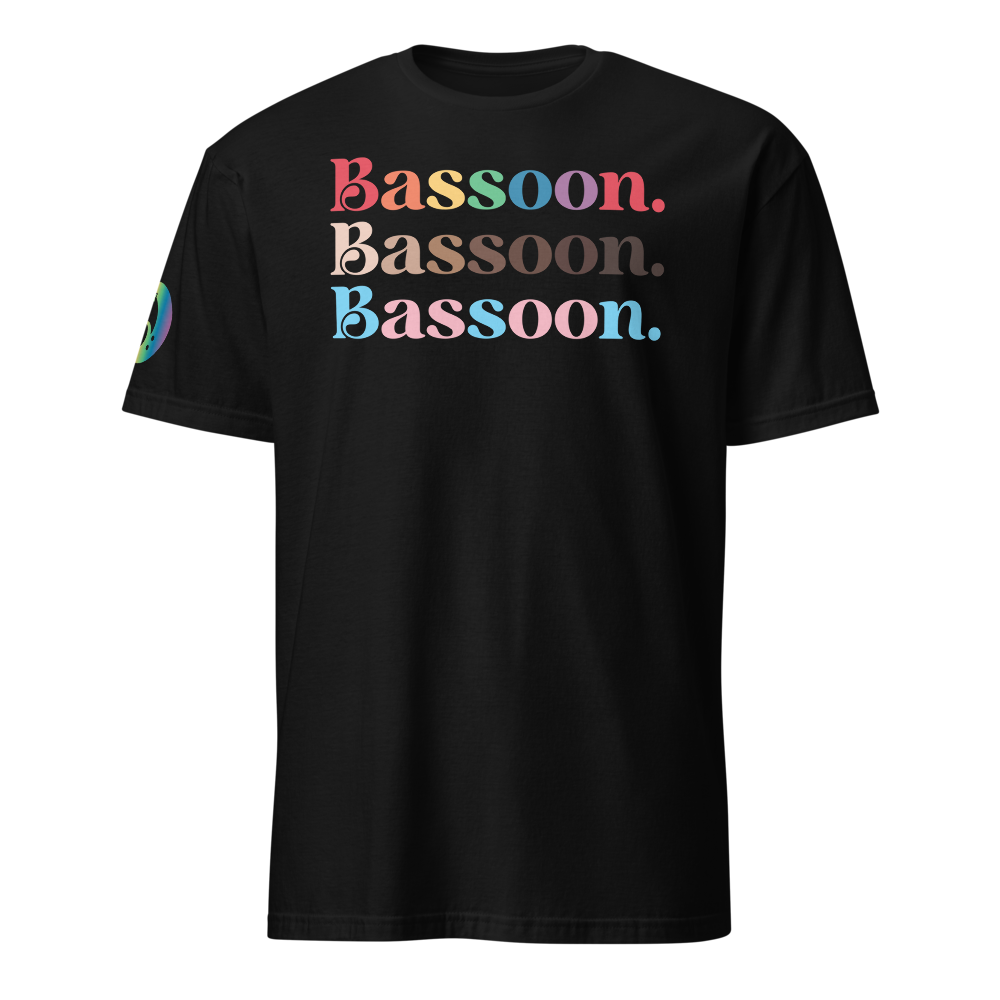
A variety of fun gift ideas for bassoonists including games, books, shirts, and unique holiday-themed presents!
Most problems with the bassoon are easy to troubleshoot if you know where to begin. Here is a guide on emergency bassoon repairs you can safely do at home.
There are five elements of a great bassoon sound. Each of these elements contributes something different to your tone production and must be kept in balance to create a beautiful sound.
The bassoon requires specific techniques to improve the sound and tone quality of certain unique notes. Here are some tips for teaching Half-Holing, Voicing, Flicking, and Vibrato.
Learn the best bassoon fingerings for tricky notes, special fingering techniques, and fingerings to avoid.
Amanda Pierce
Bassoonist, Educator, Arts Administrator
Blue Moon Bassoon LLC was created by Amanda (Turley) Pierce (she/her), a bassoonist, educator, and arts administrator in Austin, Texas. Amanda received her Bachelor of Music in Bassoon Performance from Oberlin Conservatory, studying with George Sakakeeny, and her Master of Arts in Arts Administration from Florida State University, studying with Jeffrey Keesecker and Dr. Anne Hodges. She has worked with hundreds of bassoon students of all ages and performed as a freelance musician across Central Texas. She also served as the Executive Director of the Austin Symphonic Band.
Amanda is currently the Digital Communications Specialist at the Texas Music Educators Association (TMEA) where she uses her expertise in graphic design and digital marketing to promote the transformative power of music education and amplify TMEA's mission across digital channels.
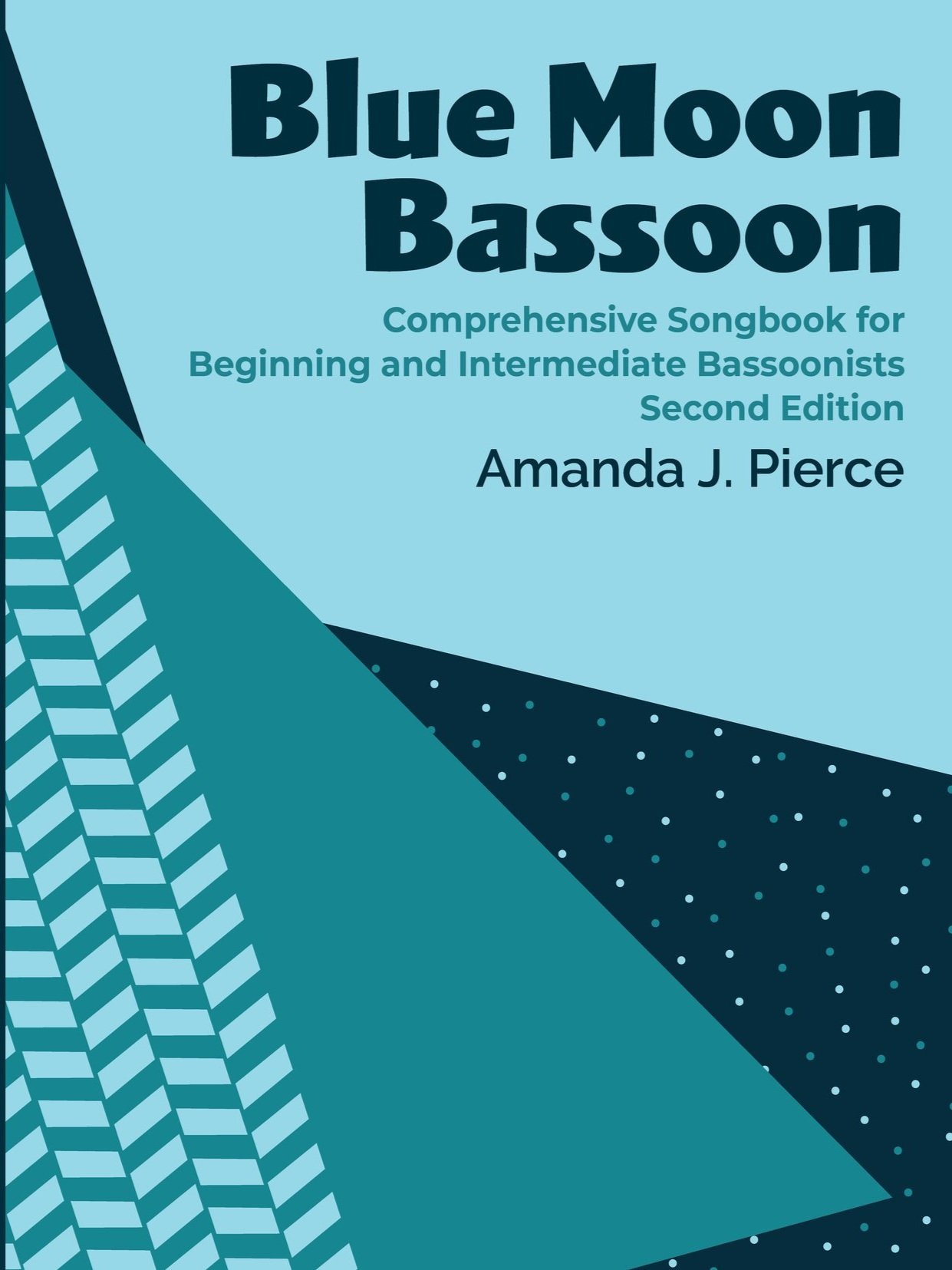
Amanda is the author of the Blue Moon Bassoon Songbook, #BassoonGoals: Scales & Arpeggios, and #BassoonGoals: Getting Started Workbook for Bassoonists.
Beautifully crafted books for bassoonists & teachers
Designed by a professional bassoonist who has worked with hundreds of students of all ages. Inspire students to explore the bassoon, learn essential techniques, and build strong fundamentals while nurturing joyful musical expression.
Songbook for Beginner & Intermediate Bassoonists
Getting Started Workbook for Beginners
Scales & Arpeggios for All Levels
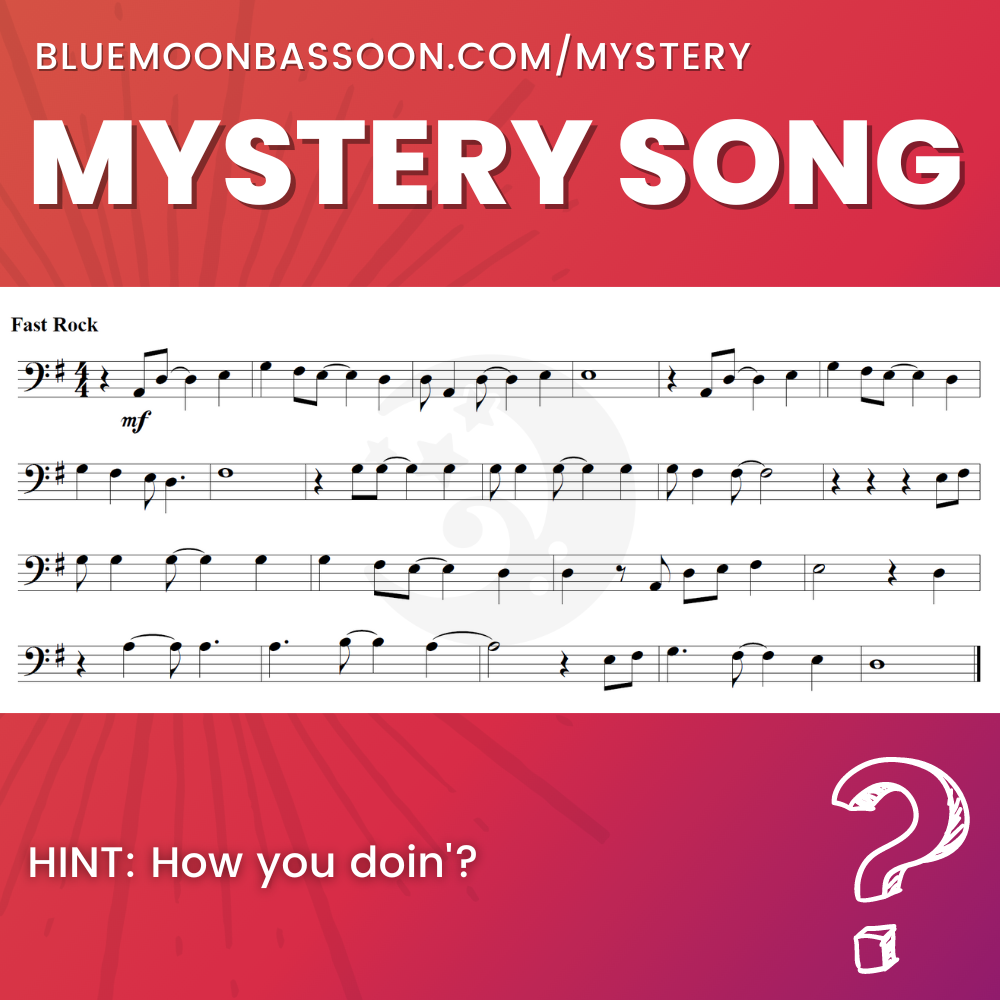
Play a mystery song
Hint: May the stars shine down on you...
Pro-tip: Use the pinky F-sharp fingering to ensure a smooth transition between B-flat and F-sharp.
Hint: Paint my nails, cherry red, match the roses that you left.
Pro-tip: Flick and use focused, fast air to ensure the tenor register notes have good intonation and clear tone.
Hint: Sometimes family weirdos just get a bad rap.
Pro-tip: Use strong air support to encourage the notes above the staff to speak with good tone.
Hint: I’m not superstitious, but I am a little stitious.
Pro-tip: Flick high A, B-flat, and C with the correct left-hand thumb keys to ensure those notes speak clearly with a good tone.
Hint: Every night I lie in bed. The brightest colours fill my head…
Pro Tip: Don’t rush this melody. Count your 8th notes carefully to make sure you hold the notes for the correct length.
Hint: Life here is amazing, just not for the faint of heart.
Pro-tip: Have fun with the grace notes in this piece. They give the melody a lot of character!
Hint: Let’s-a-go!
Pro-Tip: Watch your accidentals carefully in this piece! And don’t skip the repeat on the first line.
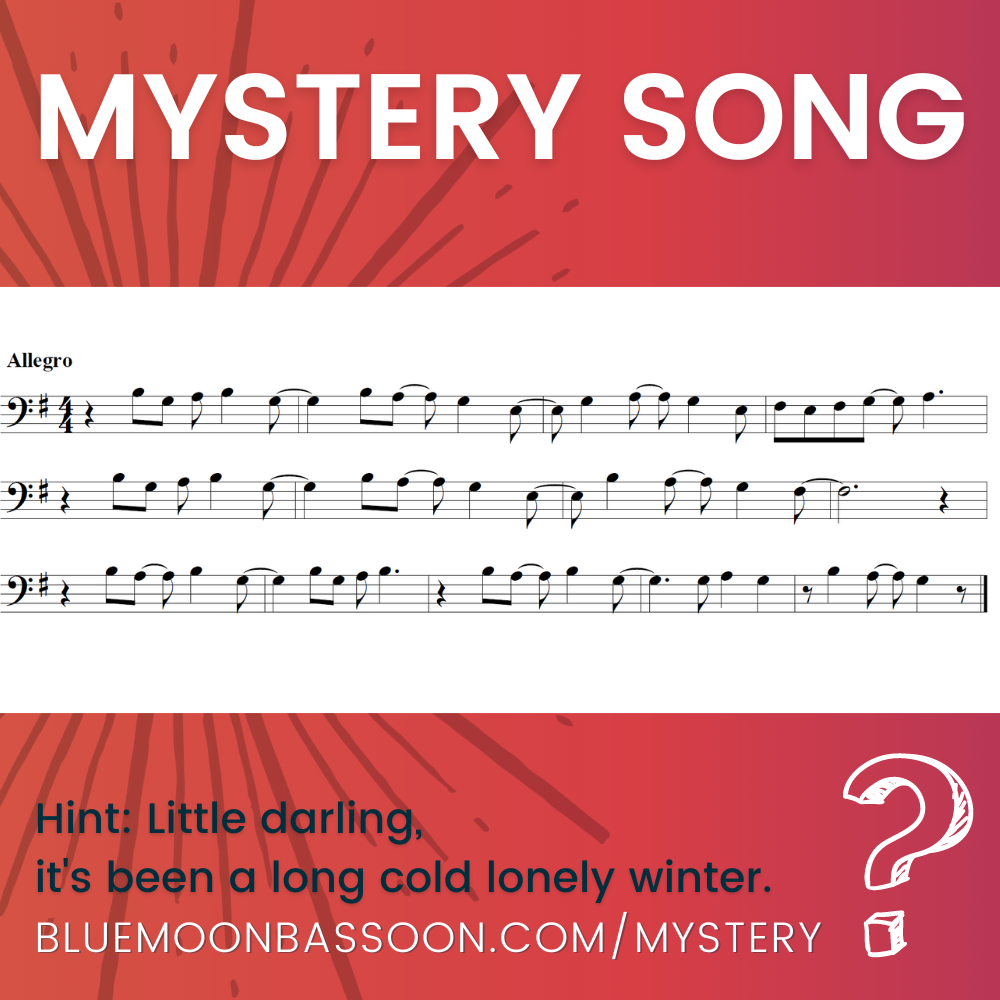
Hint: Little darling, it’s been a long cold lonely winter.
Pro-Tip: Check your key signature and adjust your half-hole size for F-sharp. You may need a bigger half hole than usual to play it without cracking.
Hint: These days they call me the Pirate Lord…
Pro-Tip: Watch your accidentals carefully and subdivide triplets to make sure your rhythm is spot on!
Hint: Just remember what your old pal said…
Pro-Tip: Flick and use fast, focused air to ensure all of your notes above the staff speak clearly without cracking or sounding flat.
Hint: A tune from Jazz Impressions of a Boy Named Charlie Brown?
Pro-Tip: Follow the articulations carefully in this piece to give a more jazzy, upbeat feel.
-
Find Bassoon Teachers

-
Add a listing

-
Browse Reed Makers